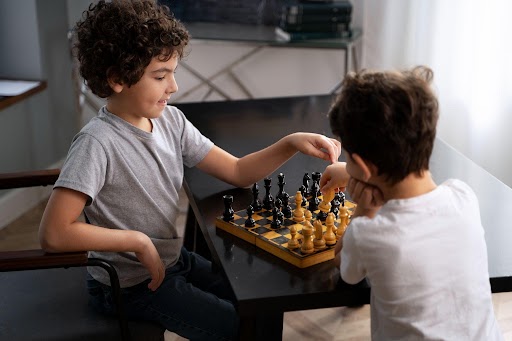
A child who enjoys chess may begin with casual games at home, curious about how the pieces move and what happens after each decision. As interest grows, parents often start looking for structured learning that can turn that curiosity into useful skills. Finding the best online chess classes for kids is not simply about choosing a convenient class. The learning method, coaching style, practice opportunities, curriculum, and level of guidance can all influence how effectively a child develops.
Start With The Child’s Current Level
The right chess program should match the child’s existing knowledge. A complete beginner needs a different starting point from a child who already understands basic tactics and regularly plays games.
Initial lessons may focus on board awareness, piece movement, checkmate, and simple tactical patterns. More experienced learners may need work on calculation, opening principles, positional decisions, or endgames.
Matching the course to the child’s ability prevents lessons from becoming either overwhelming or unnecessarily repetitive.
Look For A Structured Curriculum
A collection of unrelated chess lessons may provide information without creating a clear learning path. A structured curriculum connects concepts so that one skill supports the next. This is especially important when choosing best chess classes online, as a well-planned program can provide a more consistent learning experience.
For example, children can first learn how pieces move before studying simple combinations. Once tactical patterns become familiar, lessons can introduce planning and positional concepts.
A clear progression also allows parents to understand what their child is expected to learn over time.
Consider How Coaches Teach
Chess knowledge alone does not automatically make someone an effective teacher. Children need explanations that match their age and experience.
A good lesson can involve positions, questions, puzzles, examples, and discussion rather than one-way instruction. When a child is asked to explain why a move works, the coach can see whether the concept has actually been understood.
This interactive approach can make lessons more engaging while revealing areas where additional practice is needed.
Give Children Space To Solve
One important part of chess education is allowing children to think independently. If a coach immediately provides every answer, the student may understand the solution without developing the process needed to find it. This makes best chess online course programs more valuable when they encourage active problem-solving rather than passive learning.
A stronger learning environment can present a position and give the child time to examine possible moves. The instructor can then guide the child towards important clues without taking over the decision.
This encourages children to become more comfortable with uncertainty and calculation.
Use Puzzles For Targeted Practice
Chess puzzles are useful because they isolate particular skills. One puzzle may involve a fork, another a mating pattern, and another a defensive resource.
This focused practice helps children become familiar with recurring tactical ideas. Eventually, a pattern learned through puzzles may appear naturally during a game.
Puzzles can also make practice more varied. Instead of playing complete games every time, children can spend a short session concentrating on one specific skill.
Make Game Analysis Part Of Training
A completed game contains useful information about a player’s decisions. Reviewing it can reveal whether a child missed a tactical opportunity, moved a piece without a clear purpose, or failed to respond to an opponent’s threat.
Game analysis becomes more valuable when children are encouraged to think about the position themselves. They can be asked what they considered during the game and what they might do differently now.
This creates a connection between coaching and real playing experience.
Balance Online Learning And Practice
Online chess education can provide flexibility, but lessons should not exist separately from actual play. Children need opportunities to apply what they learn.
A useful routine might combine coached sessions with puzzles, practice games, independent study, and game reviews. Each activity serves a different purpose.
Lessons introduce ideas, puzzles reinforce patterns, games test decision-making, and reviews help identify mistakes. Together, these activities can create a more complete learning process.
Check The Course Format And Schedule
Families have different routines, so the practical format of a chess program matters. Parents may need to consider class timing, lesson duration, group size, session frequency, and whether individual attention is available.
A course that fits comfortably into the child’s weekly schedule is easier to maintain consistently.
If parents are searching for the best chess classes near me, convenience can be one consideration, but it should be balanced with the teaching format and the child’s actual learning requirements.
Understand How Progress Is Measured
Chess improvement can involve more than winning games. A child may become better at spotting threats, calculating variations, using time wisely, or converting simple endgames.
A learning program can make progress easier to understand by reviewing games, tracking recurring mistakes, assessing puzzle performance, or discussing areas that require further work.
Clear feedback also helps children recognise their own development. Seeing improvement in a specific skill can be more meaningful than focusing only on a tournament result.
Encourage Healthy Competitive Habits
Competition can motivate children, but the learning process should remain more important than individual results.
A tournament game may end in a loss because of one overlooked tactic, but that result can become useful if the child understands what happened. Similarly, a win can contain mistakes that deserve attention.
Learning to review both successful and unsuccessful games helps children develop a balanced approach to competition.
Think About Long-Term Progress
The best chess online course should give children room to progress rather than focusing only on immediate results. As their knowledge grows, they should have opportunities to explore more advanced tactics, deeper calculation, strategy, endgames, and competitive preparation.
Long-term learning also requires variety. Repeating the same type of lesson can become predictable, while gradually introducing new challenges can keep children interested.
Parents can therefore look for programs that provide a clear path from foundational concepts towards more advanced skills.
Conclusion
Choosing a chess learning program involves looking beyond the convenience of an online class or the location of a coaching centre. A child’s level, curriculum, teaching approach, practice routine, feedback system, and opportunities for independent thinking all matter.
For families seeking a structured learning environment that can grow alongside a young player’s abilities, Chessbrainz offers chess programs designed to combine guided instruction with practical development and regular skill-building.
Be the first to comment on "How To Choose A Chess Learning Program For Children"