If you walk into most mid-sized or large companies and ask how their internal communication works, the answer is usually vague. “We use a phone system.” “It’s cloud-based.” “IT handles it.”
But when you dig a little deeper — especially in companies that are scaling — you start to see friction. Calls don’t always reach the right department. Remote employees rely on personal numbers. Sales and support teams operate on slightly different systems. Reporting is stitched together.
None of these problems feel urgent on their own. Together, they slow everything down.
That’s usually the point where businesses start reconsidering how their telephony is structured, and why IP-based systems have become more than just an upgrade — they’ve become infrastructure.
The Shift Away From Hardware Thinking
Traditional phone systems were built around physical lines and fixed setups. Expansion meant more wiring. New offices meant separate configurations. Moving desks meant involving IT.
It worked — but it wasn’t flexible.
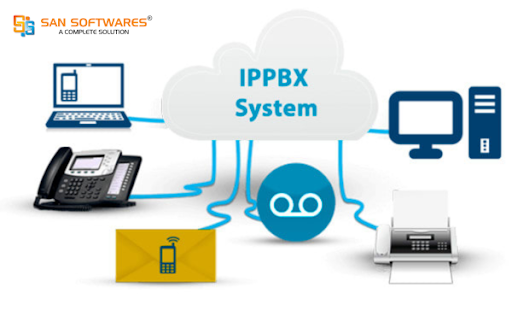
An IP PBX system changes that foundation. Instead of routing calls through rigid circuit-switched lines, it routes them over IP networks. Voice becomes data. That may sound technical, but in practice it removes a huge amount of friction.
Suddenly:
- Adding a new extension doesn’t require rewiring
- Remote teams operate inside the same system as headquarters
- Internal transfers feel seamless rather than layered
For enterprises operating across cities — or countries — this shift is not cosmetic. It simplifies control.
Centralized Without Feeling Centralized
One of the overlooked advantages of an IP PBX system is that it centralizes management without forcing centralization in experience.
From an admin perspective, policies, routing rules, extensions, and permissions are managed in one environment. From an employee perspective, it just feels like the phone system works — wherever they are.
This matters more than most leadership teams initially realize. When communication feels fragmented, departments operate defensively. When communication feels unified, collaboration improves almost quietly.
Cost Is Part of It — But Not the Main Story
Yes, IP-based telephony reduces costs, especially around long-distance and infrastructure maintenance. But enterprises rarely shift systems purely for savings.
They shift because old systems slow decision-making.
When reporting is difficult, managers can’t see peak call loads clearly. When call transfers fail, customers repeat themselves. When scaling requires hardware purchases, growth plans stall.
The financial savings are real. The operational clarity is what makes it strategic.
Where Hosted Call Center Software Enters the Picture
Internal communication is one layer. Customer-facing communication is another.
Enterprises handling large inbound volumes or outbound campaigns often realize that their internal phone backbone isn’t enough. They need visibility into queue lengths, agent availability, campaign pacing, and response times.
This is where hosted call center software becomes relevant — not as a replacement for an IP PBX system, but as an extension of it.
Because it’s hosted, deployment doesn’t revolve around servers sitting in a specific building. Teams log in through secure environments, whether they’re in-office or remote. Scaling doesn’t mean purchasing additional hardware — it means adjusting capacity.
For businesses managing seasonal spikes or expansion phases, that flexibility is hard to ignore.
The Operational Impact Is Subtle but Powerful
When enterprises combine an IP PBX backbone with hosted call center software, changes show up in small operational details:
Support teams spend less time manually redirecting calls.
Sales teams follow up faster because dialing and logging are structured.
Supervisors can actually see live performance instead of reviewing it days later.
There’s also a psychological shift. When agents trust the system — when calls route correctly, when reporting is accurate — stress levels drop. And when stress drops, performance stabilizes.
That part rarely appears in product brochures, but it’s very real in practice.
Enterprise Communication Is No Longer Location-Bound
Five years ago, many enterprises still treated remote capability as optional. Today, distributed teams are normal.
IP-based telephony makes that possible without duct-taping solutions together. An employee in a different city can function as if they’re sitting inside headquarters. Extensions, call transfers, conferencing — all operate within the same logic.
Hosted call center software extends that flexibility to customer operations. Supervisors monitor distributed agents. Quality teams review calls regardless of location. Reporting stays centralized even when the workforce isn’t.
That continuity matters. It prevents the “split system” problem that used to appear when companies expanded geographically.
Be the first to comment on "How IP-Based Telephony Actually Changes Enterprise Communication"