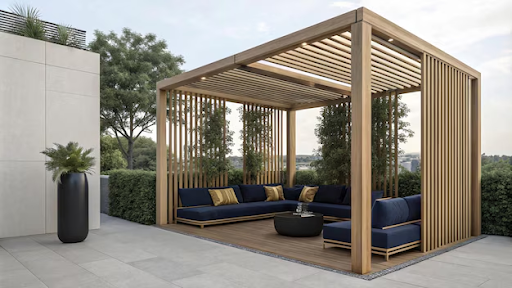
In outdoor structure design, few elements have proven as consistently desirable—or as widely misunderstood in terms of quality variation—as the pergola. Timber frame pergolas represent the premium tier of this structure category: engineered, crafted, and detailed with heavy timber construction principles that produce structures of genuine architectural presence, multi-decade durability, and natural material beauty unavailable from light-frame or prefabricated alternatives.
The Case for Heavy Timber in Pergola Construction
A timber pergola is not simply a larger version of the four-post structures sold in flat-pack boxes at home improvement stores. The distinction is fundamental:
Structural Scale Timber frame pergolas use 6″x6″ to 8″x8″ or larger posts—structural members with the visual weight and load-bearing capacity appropriate to permanent outdoor architecture. Light-frame pergola kits use 4″x4″ posts that flex visibly under load and appear tentative in proportion to most residential outdoor spaces.
Joinery Quality Timber frame pergolas use precision mortise-and-tenon connections, engineered timber connectors, or detailed hardware systems that produce clean, architectural details at every joint. The craftsmanship visible at each connection point is part of the structure’s aesthetic identity.
Durability A timber pergola built from appropriate species, detailed with protective post bases, and maintained with appropriate finish treatments will serve for 40–70+ years. Light-frame alternatives typically require significant reconstruction or replacement within 15–20 years.
Structural Capacity The load-bearing capacity of heavy timber pergola structures accommodates mature climbing plants (which can weigh hundreds of kilograms on a large structure), shade cloth and polycarbonate infill systems, ceiling fans, heaters, lighting, audio equipment, and overhead string lights—all without the deflection and connection failures that challenge light-frame pergola structures under similar loads.
Design Expressions in Timber Pergolas
Attached Pergola Connected to the home at one end—typically at a ledger beam attached to the home’s wall framing—the attached timber pergola creates a covered outdoor room directly accessible from interior living spaces. This is one of the most common configurations, extending the home’s footprint into the outdoor environment.
Freestanding Pergola A completely independent structure on its own four (or more) post foundations. Freestanding timber pergolas can be positioned anywhere on the property—at pool edges, within garden areas, or as destination structures at the end of garden paths.
Arbor-Style Pergola Narrower, gateway-form pergolas over garden paths or transitions create covered passage experiences rather than seated areas.
Extended Pergola with Shade Integration Polycarbonate panel infill, retractable shade cloth, or growing plant canopy integrated into timber pergola design provides effective sun and light rain protection while maintaining the open-overhead character that defines the pergola typology.
Material Selection for Timber Pergolas
Western Red Cedar The most commonly specified species for outdoor timber structures. Naturally resistant to decay and insect damage, dimensionally stable, and beautifully grained. Cedar weathers to a dignified silver-gray without finish or can be maintained in its warm natural tone with penetrating oil treatments.
Douglas Fir Stronger than cedar and cost-effective for larger structures where size and load requirements favor its structural properties. Requires finish treatment for outdoor durability.
Reclaimed Timber Salvaged structural timber from historical buildings brings extraordinary character—weathered patina, aged grain, and visual authenticity—to pergola construction. Reclaimed timber also contributes sustainability credentials for environmentally conscious projects.
Permitting Timber Pergolas
Permanent outdoor structures typically require building permits. Key regulatory considerations include:
- Setbacks: Minimum distance from property lines (typically 5’–10′ for detached accessory structures)
- Maximum coverage: Total percentage of lot covered by structures, including existing buildings
- Height limits: Typically 10’–15′ for single-story accessory structures
- HOA approval: Many residential communities require design review for visible outdoor structures
Working with experienced timber frame designers who understand local code requirements ensures designs are permit-ready without costly revisions.
Long-Term Value of Timber Pergolas
Timber frame pergolas are frequently cited by real estate professionals as meaningful contributors to outdoor living quality assessments. Well-photographed for real estate marketing, quality timber pergolas communicate investment and care that enhances buyer perception and supports property pricing.
The enduring aesthetic—improving with the maturity of climbing plants and the character of aged timber—ensures timber pergolas remain assets rather than liabilities on the properties they serve.
Conclusion
Timber frame pergolas deliver what simpler outdoor structures promise but rarely provide: genuine architectural presence, multi-decade structural integrity, and the natural material beauty that improves rather than deteriorates with age. For homeowners committed to outdoor living quality and long-term property investment, a well-designed timber pergola built from quality material by experienced craftspeople is an outdoor structure that rewards its investment every day across an extended service life.
Be the first to comment on "Why Are Timber Frame Pergolas a Superior Outdoor Choice?"