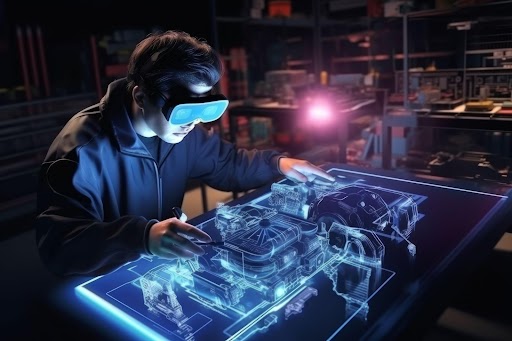
The construction and design industry faces increasing pressure to deliver projects with exceptional accuracy, efficiency, and cost-effectiveness. Traditional measurement methods, though reliable in simple scenarios, often struggle with complex geometries, tight tolerances, or large-scale infrastructure. 3D laser scanning has emerged as a transformative tool, providing precise, comprehensive, and actionable data for every phase of a project.
By capturing millions of points in a digital environment, professionals can visualize, verify, and optimize designs with unparalleled accuracy. This technology reduces errors, streamlines workflows, and bridges the gap between design intent and on-site execution.
Capturing Accurate Spatial Data for Complex Projects
Accurate measurements are the -foundation of precision in construction and design. This section explores how laser scanning captures detailed spatial data, creating a reliable digital representation of complex structures and environments to enhance planning and execution.
- Millimeter-Level Accuracy: Achieving high precision in construction starts with reliable measurement. This laser scanning captures data points with millimeter-level accuracy, ensuring every wall, beam, and structure is represented exactly as it exists in the real world. This precision is critical for complex projects such as high-rise buildings, bridges, or intricate architectural designs.
- Comprehensive Point Cloud Generation: The process produces dense point clouds representing every surface, edge, and contour. These high-resolution digital models allow teams to analyze structural complexities, detect hidden flaws, and plan construction sequences effectively. Point cloud data also serves as a reference for future renovations, extensions, or quality audits.
- Efficient Data Acquisition: Unlike manual measurements, which can be time-consuming and error-prone, laser scanning collects extensive data quickly. Entire floors, large machinery, or multi-level structures can be scanned in hours rather than days, improving project timelines and reducing on-site disruption.
Enhancing Design Verification and Quality Assurance
Ensuring that construction matches design intent is critical for project success.This section examines how laser scanning helps teams verify models, detect discrepancies, and maintain high-quality standards throughout the construction process.
- Digital Model Alignment: By integrating scan data with CAD or BIM models, professionals can verify that construction aligns with the original design. Discrepancies are highlighted early, allowing corrective actions before errors escalate. This ensures that the built environment faithfully reflects design intent.
- Improved Structural Accuracy: Laser scanning supports the precise placement of components and assemblies. It verifies alignment, spacing, and orientation of critical elements, reducing rework and minimizing material waste. In complex infrastructure projects, these checks are essential for structural integrity.
- Predictive Problem-Solving: Advanced scanning enables engineers to identify potential clashes between structural, mechanical, or electrical systems. By simulating scenarios before actual installation, teams prevent delays, improve safety, and enhance project predictability. This predictive approach reduces risk and supports better planning.
Facilitating Collaboration Across Teams
Effective coordination between architects, engineers, contractors, and clients is essential. This section highlights how 3D scanning centralizes data, enables remote visualization, and improves communication to ensure all stakeholders are aligned.
- Centralized Project Data: Large construction projects involve architects, engineers, contractors, and clients. 3D laser scanning creates a shared digital dataset that all stakeholders can access, improving coordination and reducing miscommunication. Every team member works from the same reliable information.
- Remote Visualization and Planning: High-resolution digital models enable remote review of designs and progress. Stakeholders can assess site conditions, approve modifications, and make informed decisions without physical presence. This approach reduces travel, accelerates approvals, and maintains project momentum.
- Enhanced Client Engagement: Accurate 3D representations provide clients with clear visualizations of design intent and project progress. By presenting detailed scans, teams can demonstrate precision, explain construction choices, and build confidence in project delivery.
Integrating Scanning with Advanced Design Tools
Bridging physical and digital workflows maximizes precision and efficiency. This part explains how scan data integrates seamlessly with BIM and CAD platforms, supports clash detection, and creates valuable digital twins for long-term project management.
- Seamless BIM and CAD Integration: 3D laser scan data can be imported directly into BIM and CAD platforms, enabling precise digital modeling. Designers can work with real-world measurements, reducing assumptions and minimizing errors. This integration ensures that both planning and execution phases maintain alignment with the intended design.
- Clash Detection and Design Optimization: When integrated with advanced software, scanned data facilitates clash detection, helping teams optimize layouts for structural, mechanical, and electrical components. Potential conflicts are resolved before installation, saving time and resources.
- Lifecycle Management Support: Beyond construction, scanned data becomes a long-term asset. Facilities managers can use these digital twins for maintenance planning, retrofitting, or asset tracking, ensuring sustained accuracy and operational efficiency throughout the building’s life.
Improving Efficiency and Reducing Costs
Time, resources, and cost control are critical in construction. This section details how laser scanning reduces errors, accelerates project timelines, and optimizes resource allocation, ensuring projects are delivered on schedule and within budget.
- Minimizing Rework and Material Waste: Errors in construction lead to delays and increased costs. By providing precise measurements and comprehensive models, laser scanning reduces rework and eliminates guesswork. Accurate scans ensure that components fit correctly, improving project reliability.
- Accelerated Project Timelines: Rapid data collection enables faster decision-making, design adjustments, and approvals. Teams can progress through complex phases without waiting for repeated measurements or site inspections, shortening overall project duration.
- Optimized Resource Allocation: Detailed insights allow project managers to deploy labor, equipment, and materials efficiently. Resource planning is informed by exact spatial data, reducing idle time, minimizing waste, and enhancing overall productivity.
Conclusion
Precision is the cornerstone of successful construction and design projects. 3D laser scanning transforms the way professionals approach measurement, planning, and execution by delivering highly accurate spatial data, enhancing collaboration, and integrating seamlessly with advanced digital tools. It reduces errors, prevents costly rework, and improves project timelines, all while providing a reliable foundation for decision-making. From verifying structural alignment to facilitating long-term facility management, the technology enables organizations to achieve unmatched precision in construction and design.
For those looking to elevate project accuracy and operational efficiency, Lyca Survey provides state-of-the-art high resolution 3D scanner solutions combined with expert guidance, helping teams fully leverage this advanced technology. By delivering precise spatial data, streamlined workflows, and actionable insights, they ensure every stage of a project, from planning and design to execution and quality verification, is executed with unmatched precision, ultimately guaranteeing that each project consistently meets the highest standards of quality, reliability, and operational excellence.
Be the first to comment on "How 3D Laser Scanning Transforms Precision in Construction and Design"