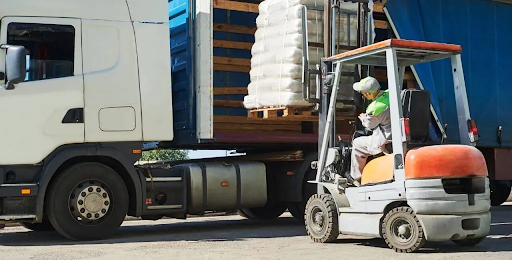
Load distribution determines how weight is spread across the axles of the vehicle. When cargo is placed unevenly, certain parts of the vehicle carry more pressure than others. This imbalance affects steering response and braking performance, especially when the vehicle is travelling at speed or navigating tight turns. Drivers may notice the vehicle pulling slightly to one side or requiring more effort to maintain a straight path.
Heavy vehicles respond very differently to weight shifts compared with smaller passenger vehicles. A poorly balanced load can raise the vehicle’s centre of gravity, making it more vulnerable to tipping during sharp turns or sudden manoeuvres. The effect becomes more pronounced when travelling on uneven roads, approaching roundabouts, or exiting motorways where directional changes occur quickly.
Braking behaviour also changes when weight is not evenly distributed. If too much weight sits toward the rear of the trailer, the vehicle may take longer to stop because the front axles carry less pressure against the road surface. In contrast, excessive weight toward the front can overload steering components and reduce stability when the driver attempts to change direction. In both situations, the driver may experience reduced control when reacting to traffic conditions.
Another issue arises when cargo is not secured properly within the trailer. Even if the load initially appears balanced, unsecured cargo can shift during movement. When a heavy load slides slightly during braking or cornering, the centre of gravity of the vehicle changes suddenly. These shifts can surprise the driver and create instability at precisely the moment when the vehicle requires maximum control.
Drivers often encounter these risks when transporting mixed cargo or palletised goods. Different cargo shapes and weights require careful planning during loading. Placing heavier items low and close to the centre of the trailer helps maintain a stable centre of gravity. Lighter cargo can then be arranged around these heavier items to maintain balance across the entire vehicle.
Loading procedures therefore play an important role in accident prevention. Drivers who check cargo placement before starting their journey gain a clearer understanding of how the vehicle will respond on the road. Confirming that cargo restraints, straps, and barriers are secure also reduces the chance of sudden weight shifts during transport.
Road conditions further influence how load distribution affects vehicle stability. Strong crosswinds, uneven road surfaces, or sudden lane changes can amplify the effects of an imbalanced load. A vehicle that might feel manageable during slow urban driving could become unstable at higher motorway speeds when exposed to these forces.
Insurance considerations also reflect the operational realities of heavy goods transport. HGV insurance exists to cover vehicles used for transporting goods commercially, recognising that these vehicles operate under demanding conditions and often carry significant cargo weight. Because of the potential financial and safety risks associated with large vehicles, appropriate HGV insurance provides protection for drivers and operators if accidents occur during transport operations.
However, insurance alone cannot remove the risks created by poor loading practices. Preventing incidents begins with careful planning before the vehicle leaves the depot. Drivers, warehouse staff, and transport managers must work together to ensure cargo weight is distributed correctly and secured properly for the journey.
When loads are balanced and secured effectively, heavy goods vehicles handle more predictably. Steering remains responsive, braking distances stay within expected limits, and the driver can maintain better control during complex traffic situations. In contrast, poorly distributed cargo introduces uncertainty into every manoeuvre.
For professional drivers responsible for transporting goods across long distances, understanding how load distribution influences vehicle stability is essential. Proper loading practices support safer driving conditions, protect cargo during transit, and reduce the likelihood of incidents that could disrupt operations on the road.
Be the first to comment on "How Load Distribution Impacts HGV Stability and Accident Risk"