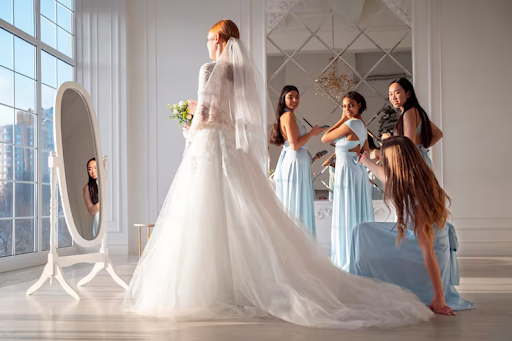
Wedding dress shopping is often described as magical, but for many brides it feels more overwhelming than anything else, with endless silhouettes, fabrics, and opinions to sort through in a short window of time. Bringing a bit of structure to the process, starting with your own priorities rather than what is trending, tends to make the experience calmer and the final choice more confident.
Define What Matters to You Before You Try Anything On
Before booking appointments or browsing online, take a few minutes to think through the practical shape of your day. Will the ceremony and reception be indoors or outdoors? Is the venue formal or relaxed? Will you be standing for long stretches, dancing extensively, or seated for photos and toasts? These answers matter, because a heavily beaded ball gown that looks stunning in a photo can become exhausting to wear for ten hours at an outdoor summer wedding. Write down two or three non-negotiables, whether that is comfort, a specific neckline, or a fabric you have always pictured yourself in, and let those guide your search.
Understanding Silhouette Categories
Wedding gowns generally fall into a handful of core silhouettes, and knowing them in advance makes appointments more productive. A ball gown has a fitted bodice and a dramatically full skirt, offering classic romance and working well for formal, larger venues. An A-line gown flares gradually from the waist, flattering nearly every body type while allowing ease of movement. A mermaid or trumpet silhouette hugs the body through the bodice and hip before flaring at or below the knee, dramatic and best suited to those comfortable with a fitted line. A sheath gown follows the body’s natural shape from top to bottom, often favored for beach or garden celebrations. Trying on one option from each category early on, even ones you assume you will not like, often reveals surprises about what actually feels right on your frame.
Fabric Choices and What They Communicate
Fabric affects both how a gown looks in photos and how it feels to wear for a full day. Satin and mikado have structure and a subtle sheen, often chosen for formal or evening celebrations. Chiffon and tulle move and float, suited to outdoor or destination weddings where breathability matters. Lace, whether appliqued or all-over, adds texture and romance, ranging from delicate and vintage-inspired to bold and dramatic depending on the pattern. Crepe has become popular for its clean, matte drape and comfortable wear, particularly for brides who want a modern, minimalist silhouette. Consider your venue’s climate as much as the aesthetic, since a heavy fabric in a hot outdoor setting affects comfort in ways photos will not show.
What to Check During a Fitting
A gown can look correct on the hanger and still need real adjustment once it is on the body. During any fitting, whether in person or comparing measurements for an online order, pay attention to:
Bodice fit through the bust and ribcage — should sit smoothly without gapping or pulling
Range of motion — raise your arms and take a full stride to confirm comfortable movement
Hem length with wedding shoes — bring or simulate the actual heel height you plan to wear
Undergarment compatibility — confirm what support the gown provides versus what you will need separately
Most gowns require some degree of alteration, so building in time with a skilled seamstress is part of the process rather than a sign anything went wrong.
Choosing Between Traditional White and Other Shades
While white and ivory remain the most common choices, they are far from the only ones. Soft champagne and blush tones have become widely popular, often more flattering under warm lighting and against a range of skin tones than a stark white. Some brides are choosing pale blue, sage, or dusty rose for a second look or a non-traditional ceremony. Whatever shade you land on, hold fabric swatches against your skin in both natural and indoor light before deciding, since undertones can shift dramatically between a showroom and an evening reception venue. Anyone comparing options across a wide range of cuts and tones will find that browsing a dedicated collection of gowns for the wedding dress of bride search makes side-by-side comparison far easier than piecing looks together from scattered sources, since silhouette, fabric, and shade can all be weighed together in one place.
Making the Final Decision With Confidence
The search for a dream gown often gets clearer once you stop comparing every dress to an idealized image and start noticing how each one actually feels to move in, sit in, and see yourself in across a mirror. Bring one or two trusted people whose opinions you value rather than a large group, since too many voices can drown out your own instinct. When you find the gown that keeps pulling your attention back, even after trying on dozens of others, that repeated pull is usually the clearest signal of all that you have found the right one, and it is worth trusting more than any checklist, trend report, or outside opinion.
Be the first to comment on "How to Approach Wedding Dress Shopping Without Losing Yourself in the Process"