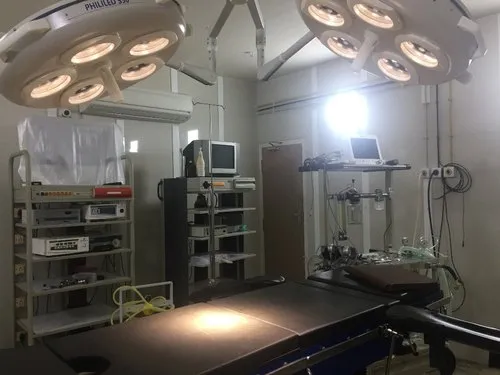
Introduction: The Shadow Problem in Surgery
Imagine performing a delicate surgical procedure where a shadow falls across the exact point you need to see most clearly. This is not a hypothetical — it is a challenge that surgeons faced for decades before the development of shadowless OT lights. Today, modern surgical lighting technology has transformed the operating theatre, eliminating shadows through precise engineering and advanced optics.
Understanding how shadowless OT lights work is essential for hospital administrators, biomedical engineers, and procurement teams who are responsible for equipping operation theatres to the highest clinical standards.
The Physics of Shadow Formation in Surgical Environments
Shadows in an operation theatre are created when the surgeon’s head, hands, instruments, or the surgical team’s bodies block the light source. In a single-source lighting setup, even a small obstruction can create a significant shadow over the surgical field.
Traditional operating lights attempted to solve this problem with a single powerful light source positioned directly above the patient. While this helped, it could not fully eliminate shadows from lateral obstructions. The breakthrough came with multi-source LED array systems that distribute light from multiple angles simultaneously.
How Modern Shadowless OT Lights Work
Contemporary shadowless OT lights use a cluster of individual LED elements arranged in a specific geometric pattern across the dome. Each LED element emits light at a slightly different angle, ensuring that when one angle is blocked, other light sources immediately compensate.
The key engineering principles involved include:
- Multi-angle LED array design: Dozens of individual LEDs positioned across the dome at calculated angles provide overlapping illumination coverage
- Reflective dome geometry: The inner surface of the dome is precision-engineered to reflect and distribute light evenly across the surgical field
- Field diameter control: Surgeons can adjust the diameter of the illuminated field from a narrow focused beam to a wide area light, depending on the surgical requirement
- Depth of illumination: Advanced optics ensure that light penetrates deep into body cavities, providing clear visibility even in laparoscopic-adjacent procedures
Lux Output and Its Clinical Significance
Lux is the unit of measurement for illuminance — the amount of light that falls on a surface. For OT lights, lux output directly determines how clearly a surgeon can see the surgical field. Here is a reference guide:
- 10,000 to 40,000 Lux: Suitable for minor procedures and outpatient surgeries
- 40,000 to 100,000 Lux: Standard range for general surgery, orthopaedics, and gynaecology
- 100,000 to 160,000 Lux: Required for complex surgeries including neurosurgery and cardiothoracic procedures
Leading shadowless OT light manufacturers in India now offer lights with adjustable lux output across this full range, giving surgical teams the flexibility to configure the light based on each procedure’s specific requirements.
Colour Rendering Index: Seeing Tissue as It Truly Is
CRI — the Colour Rendering Index — measures how accurately a light source renders the colours of objects compared to natural daylight. For surgical lights, a CRI above 95 is considered the clinical gold standard.
Why does CRI matter in surgery? Tissue differentiation is critical. Surgeons must distinguish between:
- Healthy tissue and affected tissue
- Arteries, veins, and nerves
- Muscle layers and connective tissue
- Tumour margins and healthy surrounding tissue
A light with low CRI can cause colour distortion, making tissue identification significantly harder. High-CRI LED OT lights ensure that what the surgeon sees is a true representation of the patient’s anatomy, directly contributing to safer and more precise surgical outcomes.
Correlated Colour Temperature (CCT) and Surgical Comfort
CCT is measured in Kelvin and describes the warmth or coolness of a light source. In surgical settings:
- 3,500K to 4,000K: Warmer light, easier on the eyes during long procedures, reduces surgeon fatigue
- 4,000K to 5,000K: Neutral to cool white light, ideal for procedures requiring fine tissue differentiation
- 5,000K and above: Daylight simulation, used for procedures where maximum colour accuracy is needed
The best OT lights allow surgeons to adjust CCT during a procedure, adapting to changing surgical needs without interrupting the workflow. This feature was once available only in premium imported models but is now standard in quality domestic OT light manufacturing in India.
Heat Management: Protecting Patients and Surgeons
One of the significant advantages of LED-based shadowless OT lights over halogen is heat management. Halogen lights can generate substantial heat at the surgical field, causing discomfort for the patient and potentially affecting exposed tissue during prolonged procedures.
Modern LED OT lights are engineered with:
- Passive heat dissipation through aerodynamically designed dome structures
- Separation of the light source from heat-generating components
- Cool beam technology that ensures less than 10% of total heat reaches the surgical field
- Anti-UV and anti-IR coatings on protective covers that filter harmful radiation
Smart Features in Next-Generation OT Lights
The evolution of shadowless OT lights has not stopped at better illumination. Modern surgical lights now incorporate smart features that enhance overall operation theatre management:
- Digital touch panels with memory function: Surgeons can save preferred light settings for specific procedure types and recall them instantly
- Bluetooth and wireless connectivity: Integration with hospital management apps allows remote monitoring, settings adjustment, and usage tracking
- Camera integration: Some advanced models include built-in HD cameras for surgical recording, telemedicine, and training purposes
- Auto-intensity adjustment: Sensors detect ambient light levels and automatically adjust output for consistent illumination
These smart capabilities are now available from domestic OT light manufacturers in India — eliminating the need to rely on expensive imported equipment for technology-forward surgical environments.
Conclusion: Invest in True Shadowless Technology
Shadowless OT lights are not a luxury — they are a clinical necessity. Every hospital that performs surgical procedures must ensure that its operation theatres are equipped with lighting that meets international standards for lux output, CRI, CCT, and shadow elimination.
When evaluating options, look for manufacturers who can provide verified technical specifications, clinical testing data, and robust after-sales support. Explore the full range of certified shadowless OT lights available from Ventek India, one of India’s most trusted names in surgical lighting technology.
Be the first to comment on "Shadowless OT Lights: The Science Behind Zero-Shadow Surgical Illumination"