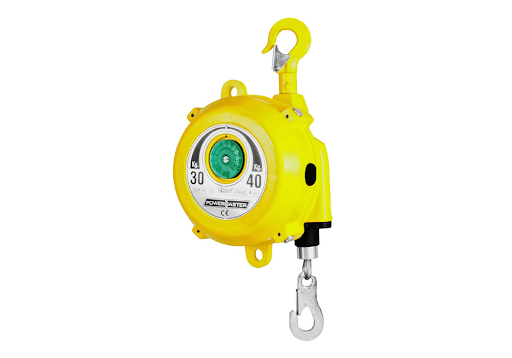
Heavy tools are frequently used for longer periods of time in industrial work. Constantly gripping these tools can lead to fatigue, strain, and decreased productivity. A Tool Balancer is a tool designed to alleviate this problem by bearing the weight of the tool, and keeping the tool within easy reach.
These devices are widely used in manufacturing plants, workshops, assembly lines, and maintenance areas. They make tool handling easier while helping workers maintain better control during repetitive tasks.
What Is a Tool Balancer?
A tool balancer is a mechanical device for hanging a hand tool above the work. It can be supported by springs or other mechanisms to carry the weight of the tool. The tool is still connected to the balancer via the cable or wire. The balancer supports the worker when he pulls down the tool. Once the tool is released, it will return to its starting position.
This basic configuration decreases the amount of work required to operate heavy tools.
How Does a Tool Balancer Work?
Most tool balancers use a spring-loaded mechanism. The spring creates a controlled force that balances the weight of the connected tool. The worker can pull the tool down when needed. After completing the task, the tool can return to a convenient position.
The balancing force can usually be adjusted according to the weight of the tool. This allows one device to support different tools within its specified capacity. Proper adjustment is important. If the tool is too heavy for the balancer, the device may not work safely or smoothly.
Benefits of Using Tool Balancers
Using Tool Balancers can provide several benefits in industrial workplaces.
-
Minimizes Worker Fatigue: Large tools can be hard to manage over extended periods. A balancer helps to carry a large portion of the weight of the tool and decreases physical strain.
-
Enhances Work Efficiency: Workers have an easier time moving and positioning tools. This can facilitate repetitive assembly and production activities.
-
Maintains Tools Accessible: Tool stays close to the operator and does not end up on a workbench after use. This prevents time loss with repeated operations.
-
Promotes Workplace Safety: Aids in avoiding additional strain and awkward movements while working with heavy tools. It also assists in maintaining the working area more organised.
-
Prevents Tools from Falling to Floor: A suspended tool is less likely to be dropped on the floor. This can help minimise accidental damage and prolong tool life.
Where Are Tool Balancers Used?
Tool balancers can be used in a variety of industrial applications. They are frequently found in auto plants, engineering workshops, assembly plants, fabrication plants, and maintenance shops. Depending on their size and function, they can hold tools like drills, grinders, screwdrivers, riveting tools and other hand tools.
Users should make sure that they choose a tool that is lightweight and fits within their working range, as well as having the right length of cable and mounting system.
How to Choose the Right Balancer
Choosing the right product requires attention to a few important points.
First, check the weight of the tool. The balancer should be suitable for the complete tool weight. Next, consider the working environment. The required cable length and mounting arrangement may differ between workstations. It is also important to select a reliable product from an experienced industrial equipment manufacturer. Regular inspection and proper maintenance should also be part of workplace safety practices.
Conclusion
A well-designed tool balancing system reduces the difficulty of heavy and/or repetitive tasks. Tool Balancers minimize strain, make tools more accessible, and enhance the flow of the workplace. Power Master offers tough tool balancing equipment for use in high impact production situations. Careful selection of the most appropriate balancer can enhance the comfort, productivity, safety and overall efficiency of workers in their industrial practices.
Be the first to comment on "Tool Balancer: Making Industrial Work Easier and Safer"