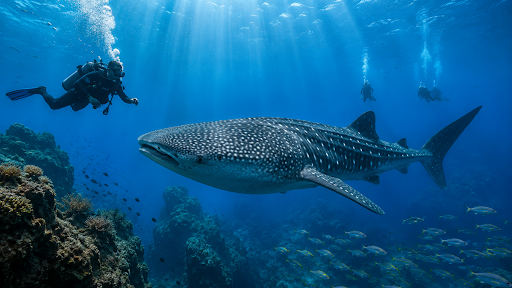
For scuba divers worldwide, few moments match the electric thrill of a shadow materializing out of the blue, resolving into the unmistakable, star-speckled silhouette of a whale shark (Rhincodon typus). Koh Tao, a vibrant jewel in the Gulf of Thailand, has earned a reputation as one of Southeast Asia’s premier hotspots for these gentle giants.
However, perfectly timing a trip involves balancing marine biology, shifting seasonal winds, and a bit of luck. To maximize your chances of a bucket-list encounter, you need to understand exactly how the local climate shapes your time underwater.
Understanding the Marine Calendar
While the tropical climate allows for underwater exploration nearly year-round, the absolute peak whale shark season on Koh Tao depends on a specific biological catalyst: plankton blooms.
The primary peak window runs from mid-March through May. As the seasonal heat builds across Thailand, the water temperature climbs to a balmy 29°C-30°C. This temperature spike triggers massive upwellings of microscopic nutrients. While this sudden plankton rush can occasionally cause minor drops in horizontal visibility, it creates an irresistible, all-you-can-eat buffet for pelagic filter-feeders.
What surprises many travelers is that there is a highly reliable secondary window from September to October. During these autumn months, the winds drop, the ocean turns mirror-flat, and a second wave of nutrients draws the sharks back before the late-year weather shifts.
Where the Giants Roam: Key Deepwater Pinnacles
Whale sharks rarely cruise shallow, sandy bays. To see them, you must venture to the outer edges of the island’s underwater topography. This is where advanced certification becomes a massive asset, as the most frequent sightings occur at isolated, deep granite structures:
Chumphon Pinnacle
Located roughly 12 kilometers northwest of the island, this colossal submerged mountain drops to a depth of over 35 meters. Swept by deep ocean currents, it is the undisputed capital for pelagic visitors.
Southwest Pinnacle
A stunning series of granite spires carpeted in soft anemones and swirling schools of trevally, offering high-probability encounters during peak migration months.
Sail Rock
Situated halfway between Koh Tao and Koh Phangan, this isolated vertical wall rises out of a 30-meter seabed. Because it stands alone in the open ocean, it acts as a magnet for massive marine life, making it a legendary day-trip destination.
Planning Around the Global and Local Climate
When figuring out when whale shark season is in Thailand, it helps to look at the broader regional picture. Thailand experiences two distinct monsoon systems. The Andaman Coast (which includes Phuket and the Similan Islands) experiences heavy rainfall and park closures from May to October.
Conversely, the Gulf of Thailand operates on a shifted schedule. The true Koh Tao diving season experiences its heaviest rains and rough seas much later, typically from November through early January.
Climate Note
Unpredictable global weather shifts mean traditional seasonal boundaries are becoming more fluid. A window that was once locked into April might arrive in late May. Divers should look for flexible travel bookings and check in directly with local dive operations for real-time marine reports before arriving.
The Dynamic Impact of the Lunar Cycle
The cosmic pull of the moon plays an underrated role in your underwater odds. Many experienced divemasters track the lunar calendar just as closely as the weather charts.
During the full moon and new moon phases, tidal movements intensify. These stronger currents churn up deep-sea nutrients and concentrate plankton clouds around the offshore pinnacles. If you can align your travel dates with a full moon, you gain a natural edge—and as a bonus, you can easily catch the famous coastal festivities on neighboring islands during your surface intervals.
The Diver’s Code of Conduct
Encountering a 6-meter fish requires strict adherence to ethical eco-tourism. Koh Tao’s dive community maintains a rigid, non-negotiable code of conduct to ensure these visits remain safe for the animals:
| Rule | Minimum Distance | Rationale |
| Maintain Space | 3 meters from body / 4 meters from tail | Prevents scaring the animal into a sudden dive. |
| No Touching | Absolute Zero Contact | Human skin oils can disrupt their protective mucous coating. |
| No Flash Photography | N/A | Bright, sudden flashes can blind and disorient the shark. |
| No Path Blocking | N/A | Never swim directly in front of their trajectory. |
Maximizing Your Journey
To truly get the most out of your trip, consider upgrading your training. Because the best hotspots feature deep plateaus and unpredictable thermoclines—abrupt layers where water temperature changes sharply—having an Advanced Open Water or Deep Diver certification ensures you can safely hang out at 30 meters when a shark glides by.
Ready to turn this bucket-list dream into reality? Reach out to a local, conservation-focused dive center today to check the current sighting logs and reserve your spot on the next boat out to the pinnacles.
Be the first to comment on "When Is Whale Shark Season in Koh Tao?"