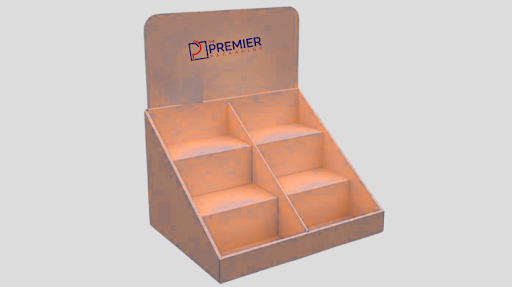
Marketing budgets get spent on a lot of things that never actually touch the customer ad impressions, email campaigns, social posts that get scrolled past in half a second. Display packaging is one of the rare marketing tools that physically sits in someone’s hands at the exact moment they’re deciding whether to buy. No other channel gets that kind of access, and it’s a little strange how often it gets treated as an operations problem instead of a marketing one.
I think that’s the real disconnect. Marketing teams plan campaigns, retail teams handle packaging, and the two rarely talk to each other about the fact that the display box is arguably the last ad the customer ever sees before pulling out their wallet.
The Advertising Channel Nobody Budgets for Properly
Every other form of advertising has to fight for attention in a crowded space a crowded inbox, a crowded feed, a crowded search results page. A display sitting on a shelf or counter has something most digital ads never get: a captive, physical moment where the customer is already holding a product category in mind and deciding between options.
That’s an enormous amount of leverage sitting in something that often gets a fraction of the budget a single social campaign would receive. It’s not that display packaging replaces digital marketing. It’s that it’s doing marketing work in a spot digital simply can’t reach the actual point of decision.
What Makes It Actually Function as Marketing, Not Just Packaging
A box that just holds a product isn’t marketing. A box that changes behavior is. The difference usually comes down to a handful of things working together rather than any single flashy feature.
Visibility does a lot of the early work. A display that stands out from three feet away, through color contrast or an unusual shape, gets a chance to be noticed before a customer’s even close enough to read anything on it. That first notice is the whole game nothing else matters if the display never gets looked at in the first place.
Messaging clarity matters right after that. Customers standing at a shelf or counter aren’t reading paragraphs. A display that communicates what the product is and why it matters in the time it takes to glance at it is doing real marketing work, the same job a well-written headline does in an ad.
Structural design plays a bigger marketing role than people expect too. A 1-2-3 bottom display lid box, for example, sets up quickly and consistently across different store locations, which matters more than it sounds like it should a display that goes up crooked or incomplete because staff didn’t have time to fuss with it undermines the whole message before a single customer sees it. Consistency across locations is part of what makes a display campaign actually work at scale rather than just in one flagship store.
Placement flexibility rounds it out. A display built to work equally well on a counter, an endcap, or a floor stand gets more total exposure across a retail footprint than one that only fits in a single specific spot, which effectively multiplies the marketing reach without multiplying the cost.
Comparing Display Packaging to Other Marketing Channels
| Marketing Channel | Customer Attention Level | Decision Proximity | Cost per Impression | Lifespan |
| Social Media Ads | Low to Moderate | Distant from purchase | Low | Seconds |
| Email Campaigns | Moderate | Distant from purchase | Very Low | Seconds to minutes |
| In-Store Signage | Moderate | Close to purchase | Low | Weeks |
| Display Packaging | High | At point of purchase | Medium | Weeks to months |
| TV or Video Ads | Variable | Very distant from purchase | High | Seconds |
What stands out in that comparison isn’t that display packaging is cheaper than everything else — it isn’t always. It’s that nothing else on the list gets that combination of high attention and zero distance from the actual purchase decision.
Where the Real ROI Shows Up
A lot of the value here doesn’t show up in a single sales spike, though that happens too. It shows up gradually, in things like repeat purchase rate and brand recall, because a customer who’s physically interacted with well-designed packaging tends to remember the brand more clearly than one who scrolled past a banner ad. That’s harder to measure cleanly, which is probably part of why display packaging gets underfunded relative to digital channels that produce a tidy dashboard of numbers.
Retail buyers respond to this too, in a way that compounds over time. A brand that consistently shows up with thoughtful, well-built displays tends to get better shelf placement and more retailer buy-in on future product launches, because retailers have already seen that brand’s displays perform. That’s marketing return that never shows up in a single campaign’s metrics but genuinely affects the business over a longer stretch.
Common Mistakes That Undercut the Marketing Value
Treating the display as an afterthought handled entirely by the packaging supplier, with no input from anyone thinking about the brand’s actual message. Designing something that looks great in a single mockup photo but doesn’t hold up or stay upright across dozens of real store environments. And probably the most common one never actually tracking whether a display changed sales behavior at all, which means the next budget conversation has no real evidence to lean on, just a hopeful guess.
Final Thoughts
Display packaging works as marketing precisely because it shows up at the one moment every other channel is trying to influence from a distance the actual decision point. Treating it like a line item buried in operations, separate from the rest of a marketing strategy, leaves real value on the table. The brands getting the most out of it are the ones designing displays with the same intentionality as an ad campaign, then actually measuring whether it worked, instead of assuming a nice-looking box is doing its job on its own.
Frequently Asked Questions
Is display packaging really a marketing expense, or just an operations cost?
Functionally it’s both, but the marketing impact is often underweighted. A well-designed display influences the exact moment a purchase decision happens, which is a role few other marketing channels can claim.
How do I measure whether a display is actually working?
Compare sell-through rates at locations using the display against locations without it, over the same time window. That side-by-side comparison usually gives a clearer answer than assumptions alone.
Does display packaging work for every type of product?
It tends to work best for products where an in-person, at-shelf decision is common — impulse items, gift purchases, anything customers weren’t necessarily planning to buy before they saw it.
What makes a display structurally reliable across many store locations?
Simple, consistent assembly matters a lot. A structure that store staff can set up quickly and correctly every time, without needing tools or guesswork, holds its marketing message far better than something fragile or confusing to build.
Should display packaging budgets come from marketing or operations?
There’s no universally right answer, but treating it purely as an operations line item tends to undervalue its actual impact. Many brands get better results when marketing has real input into the design.
Be the first to comment on "Why Display Packaging Is a Game-Changer for Product Marketing Success"